
Where We Would Put Investment Dollars in Houston in 2026
Houston added nearly 127,000 residents last year and construction pipelines are thinning. Here is how we screen neighborhoods for investors in 2026, and the seven areas on our watch list.
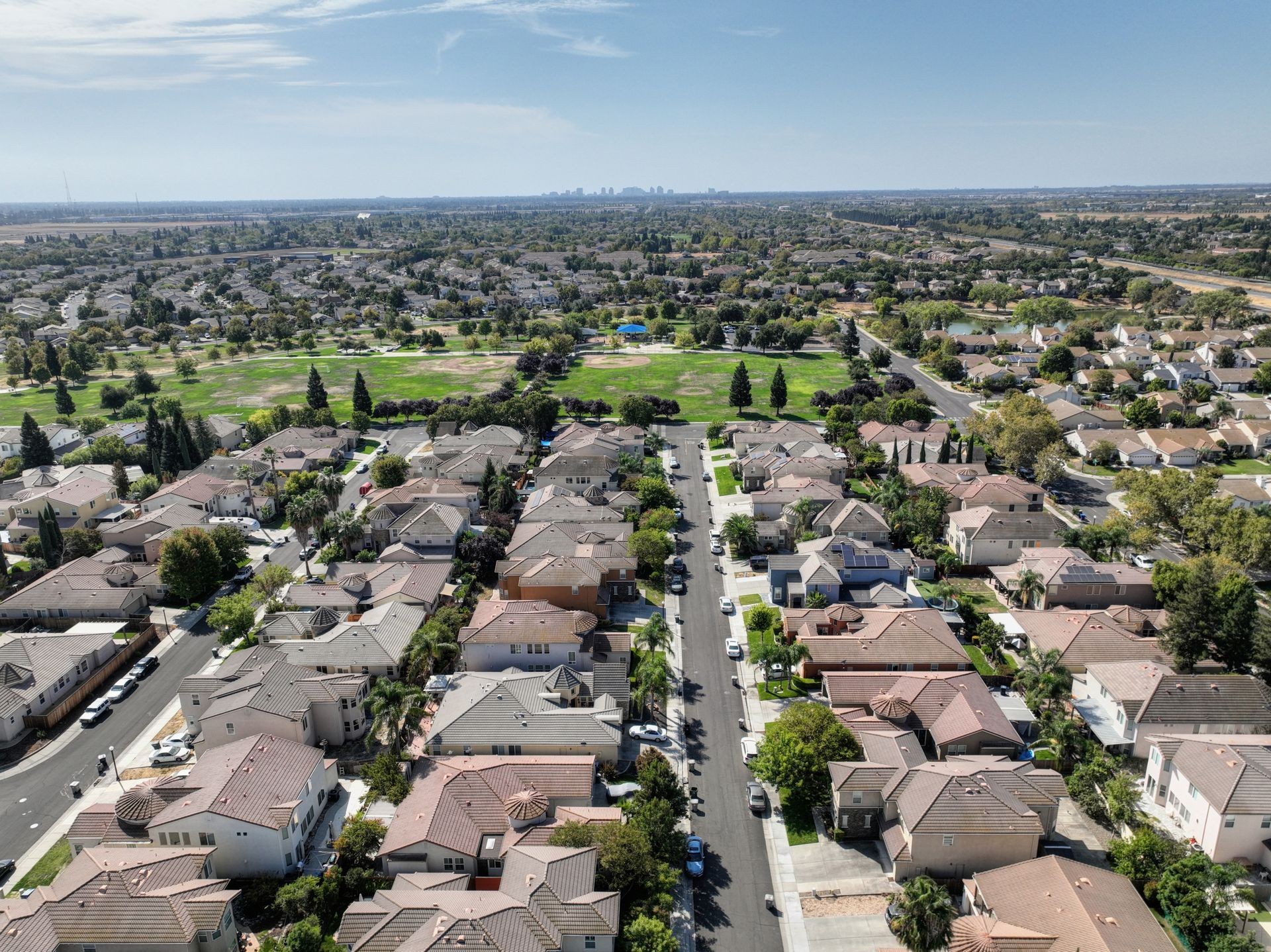
Investors call us with the same question every week: where in Houston should the money go in 2026? We give them the same answer we would give our own capital. Start with the metro fundamentals, check them against the rent data, then get street-level. Skip any of those three steps and you are speculating, not investing.
This is our current map. The fundamentals first, because they are the reason Houston belongs in the conversation at all. Then the rent picture, which is more nuanced this year than the headlines admit. Then seven areas where we are actively looking, and why.
The Fundamentals Have Not Moved
Source: Greater Houston Partnership; Yardi Matrix, 2026
Houston added just under 127,000 residents last year, more than any other metro in the country, per the Greater Houston Partnership. Harris County alone led every county in America with roughly 50,000 new residents. The metro has grown from 6.7 million people in 2015 to 7.9 million in 2025. That is 1.2 million new residents in a decade, and every one of them needs housing.
The employment side holds up too. The Partnership forecasts 30,900 new jobs in 2026, moderate growth in line with a softer national economy, with health care and social assistance contributing nearly half, about 14,000 positions. Metro Houston is on track to reach a record 3.5 million jobs by year-end. Health care jobs are the kind an investor should want anchoring a rental market. They are recession-resistant and they are tied to place: the Texas Medical Center is not relocating.
And on the for-sale side, HAR's June 2026 data shows a flat market: median single-family price of $345,000, down 0.3% year over year, with 5.2 months of inventory. For an acquirer, flat prices with strong population growth is the setup you want. You are buying the demand curve without paying a momentum premium.
What the Rent Data Actually Says
We will be straight about this, because the honest picture is more useful than the sales pitch. Houston apartment rents are soft at the metro level. Yardi Matrix put the average advertised asking rent at $1,353 in January 2026, down 1.2% year over year, with stabilized occupancy slipping 50 basis points to 92.2%. The supply wave of 2023 through 2025 did that.
But three signals point the other way.
- Rent growth turned positive to open 2026, gaining about 1.0% early in the year, per Northmarq's first-quarter Houston report.
- The pipeline is emptying. Marcus & Millichap's 2026 Houston forecast notes construction completions falling to their lowest level since 2013. Less new supply against 127,000 new residents a year does the math for you.
- The urban core is outperforming. The same forecast puts core-area average rents above $2,000 a month with vacancy near 5%. Location quality is being repriced upward inside the Loop.
Our translation: 2026 is an acquisition year, not a harvest year. Buy while metro rent growth is flat and sellers are realistic. The supply-demand crossover is visible in the data.
How We Screen a Neighborhood
Before we name areas, here is the checklist we run. Every neighborhood on our list clears most of it.
- Employment anchor within a 25-minute commute: TMC, the Port, downtown, or the Energy Corridor.
- Infrastructure or public money moving: road projects, transit, parks, or a master-planned development nearby.
- Price basis below replacement cost, so new construction cannot easily undercut you.
- Rental demand from workers, not just speculation about future buyers.
- Drainage and flood history checked parcel by parcel. In Houston this is not optional. Two streets apart can be two different risk profiles.
Seven Areas We Are Watching in 2026
1. EaDo and the East End. East of downtown, along the corridors feeding into the ballpark and soccer stadium districts. Proximity to downtown employment, townhome product that rents well to young professionals, and a basis still below comparable west-side streets. The Marcus & Millichap data on urban core rents above $2,000 is the tailwind here.
2. Second Ward, along Navigation and Harrisburg. The next ring out from EaDo. Older bungalow stock, light-rail access on the Green Line, and steady conversion of industrial parcels. We like small multifamily and renovated single-family rentals here.
3. Fifth Ward, near the East River project. The 150-acre East River development on Buffalo Bayou has changed the trajectory of the surrounding blocks. We are cautious and selective, parcel by parcel, but the infrastructure investment is real and visible.
4. Independence Heights and the North Main corridor. Just north of the Loop, minutes from downtown, with a price basis well under neighboring Heights product. Townhome development has already crossed the freeway. Rental demand follows the Heights overflow.
5. Spring Branch, off Long Point Road. Inside Beltway 8 with quick access to the Energy Corridor and Memorial City job centers. Older ranch homes on real lots, strong renter demand from nearby employment, and a long runway of redevelopment. This is our favorite value-add single-family market inside the Beltway.
6. Alief and the southwest Beltway pockets. Pure cash-flow territory. Entry prices sit well below the metro median of $345,000, tenant demand is deep, and the area's density keeps vacancy manageable. Unglamorous and effective.
7. Katy and Cypress, for the long hold. Redfin put Katy's average sale price at $355,000 in June 2026, up just 1.4% in a year. Flat suburban prices, top-rated schools, and relentless population growth along the Grand Parkway make these the markets where we park patient family-oriented rental capital. One caveat from the data: Marcus & Millichap flags near-term apartment supply headwinds in Katy and Sugar Land, so we favor single-family rentals over small multifamily out here in 2026.
What We Are Avoiding in 2026
Discipline also means naming what we will not buy right now. We are cautious on garden-style apartment product in the far west and southwest suburbs until the current supply digests; the Marcus & Millichap forecast flags exactly those submarkets. We are cautious on condos as investments, full stop. HAR's June data shows condo and townhome sales down 9.3% with the median off 6.5%, and rising HOA dues plus insurance costs land on the owner, not the tenant. And we pass on any parcel with unresolved flood history, no matter how attractive the basis looks. Houston rewards patience and punishes shortcuts.
The Tax Line Item That Eats Careless Returns
Texas property taxes are the biggest recurring expense on any Houston rental. Combined rates around 2.0% to 2.1% of taxable value are typical inside the city, and investment properties get no homestead exemption. Newer suburbs inside MUD districts run higher. We underwrite taxes at the full assessed reset that follows a sale, not at the seller's old bill, and we protest assessments every single spring. Investors who skip the protest cycle donate money to the county.
Run the Numbers Like an Underwriter
A Houston deal pencils or it does not. We model every acquisition with the current cost of money, 6.49% on the 30-year fixed per Freddie Mac's July 9 survey and typically higher for investor loans, full reset taxes, real insurance quotes, and a vacancy assumption no rosier than the 92.2% stabilized occupancy in the current Yardi data. If it cash-flows under those assumptions, the upside from the thinning supply pipeline is margin, not hope.
That is the discipline we bring from the military side of the house: plan for the conditions you have, not the ones you want. If you want our current deal flow and the full underwriting model, start with our investment services, study the neighborhood guides, and when a property makes the cut, our buyer team executes. And when it is time to trade out of an asset, our listing side knows what investor product is worth, because we buy it too.
What are the best neighborhoods to invest in Houston in 2026?
Our current watch list is EaDo and the East End, Second Ward, the Fifth Ward blocks near the East River project, Independence Heights, Spring Branch off Long Point Road, Alief for pure cash flow, and Katy-Cypress for long-hold single-family rentals. Each pairs an employment anchor with a price basis below replacement cost. The right choice depends on whether you are optimizing for cash flow, appreciation, or both.
Is Houston a good real estate investment market in 2026?
Yes, for disciplined acquirers. Houston added nearly 127,000 residents last year, more than any U.S. metro, while home prices sit flat at a $345,000 median and apartment construction is falling to its lowest level since 2013. Soft current rents plus shrinking supply plus relentless population growth is a favorable entry setup, provided you underwrite taxes and insurance honestly.
What do rental properties earn in Houston right now?
Metro-wide, Yardi Matrix reported an average advertised apartment rent of $1,353 as of January 2026, down 1.2% year over year, while urban core averages exceed $2,000 per Marcus & Millichap. Returns vary widely by submarket and property type, which is why we underwrite each deal at current rents, full post-sale property tax reset, and real insurance quotes rather than quoting a metro-wide yield.
How much are property taxes on a Houston investment property?
Expect a combined rate around 2.0% to 2.1% of assessed value inside the city of Houston, with no homestead exemption on investment properties, and higher rates in suburban MUD districts. Assessments typically reset toward the purchase price after a sale, so underwrite at your price, not the seller's old bill. Protesting the assessment each spring is standard practice and routinely saves money.
- Greater Houston Partnership. ~127,000 new metro residents last year (national leader); Harris County ~50,000 new residents (top U.S. county); metro population 6.7M (2015) to 7.9M (2025); 30,900 jobs forecast for 2026 with ~14,000 in health care; record 3.5M jobs expected by end of 2026. Also: https://houston.org/houston-data/population-growth/ (as of 2026)
- Yardi Matrix, Houston Multifamily Market Report (March 2026). Average advertised asking rent $1,353 (January 2026, -1.2% YoY); stabilized occupancy 92.2%, down 50 bps (as of January 2026)
- Marcus & Millichap, Houston 2026 Multifamily Investment Forecast. Completions lowest since 2013; urban core rents above $2,000/month with vacancy near 5%; supply headwinds in Katy and Sugar Land-Stafford (as of Q1 2026)
- Northmarq, Houston Multifamily Q1 2026. Rent growth improved to open 2026, gaining about 1.0% (as of Q1 2026)
- HAR MLS June 2026. Median single-family price $345,000 (-0.3%), inventory 5.2 months (as of June 2026)
- Redfin Katy. Average sale price $355,000, +1.4% YoY (as of June 2026)
- Freddie Mac PMMS. 30-year fixed 6.49% as of July 9, 2026 (as of July 9, 2026)
- Legal Clarity, Houston property tax rates. Houston combined property tax rate ~2.0% to 2.1% (as of Tax year 2025)

Houston Real Estate Market Update: What the June 2026 Numbers Tell Us
HAR's June 2026 numbers show a genuinely balanced Houston market: sales up 3.5%, pending contracts up 12.3%, and a median price holding at $345,000. Here is our read, segment by segment.
The First-Time Buyer's Guide to Houston: Real Numbers, Real Process
Buying your first Houston home in 2026 starts with the real monthly number, not the list price. We break down prices, property taxes, the homestead exemption, and the exact order of operations.